
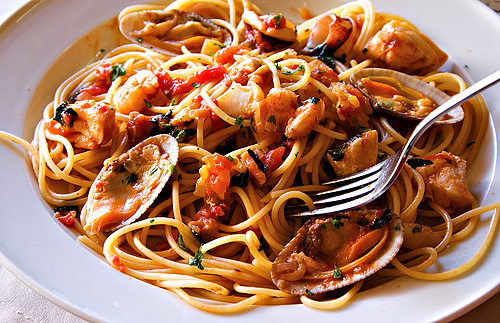
Seafood spaghetti (spaghetti alla pescatora) with mussels, scallops and prawns in a white wine, tomato and olive sauce, plus a simple guide to cleaning mussels.

This guest post was submitted by Maria Rainier, a freelance writer and blog junkie. In her spare time, she enjoys square-foot gardening, swimming, and avoiding her laptop. Well, if she keeps coming up with recipes as amazing as this, I hope she doesn’t avoid her laptop too much! Thank you so much for this mouthwatering recipe. I am most definitely going to try this myself!
Spaghetti is a classic comfort food, but unless you add meatballs or a hearty meat sauce, it’s not a great source of protein. And when you eat plain spaghetti for your evening meal, you’re cheating yourself out of some of the nutrients you need to help your body rebuild and rejuvenate overnight. Fortunately, I’ve found and tweaked a recipe for seafood spaghetti (spaghetti alla pescatora) inspired by authentic Italian cuisine.
Seafood is an excellent source of protein, and it’s much lighter than beef, so you don’t have to go meatless when you’re not in the mood for spaghetti and meatballs. In my opinion, it also tastes fresher and brings out the tanginess of the spaghetti sauce beautifully (but that might be the white wine talking). The only way to find out is to try this recipe yourself, but don’t worry: you’ll love every minute of it.
Seafood Spaghetti Ingredients
- 1 8-ounce (225g) package of spaghetti noodles (I prefer noodles made from yellow corn flour because of their natural sweetness; it complements the seafood very well)
- 1/2 cup of extra virgin olive oil
- 1/2 cup of dry white wine
- 2 garlic cloves, chopped or pushed through a garlic press
- 1 cup of crushed plum tomatoes
- Kalamata olives to taste (I use a lot, probably ten or twelve)
- 10 mussels, cleaned and rinsed
- 10 sea scallops
- 10 medium shrimp (prawns), peeled (and de-veined if you prefer)
- Spices to taste: oregano, parsley, red pepper flakes, sea salt, freshly ground black pepper, and my personal favourite, cilantro (coriander)
How to Clean Mussels
If you’re afraid of cooking mussels, you’re not alone. They’re a bit of an intimidating ingredient, but it’s well worth the effort once you’ve cooked them. This is also an easy recipe that enables you to get more comfortable with the process of working with mussels before you move on to preparing them alone (as appetizers, for instance). The first order of business is to figure out which type of mussel you have: wild (salt water) or farmed (freshwater). Be sure to read the packaging or ask if you’re ordering them from a seafood market because the cleaning process varies according to which type you’ve bought.
If you bought wild mussels, you might have a little more work ahead of you than anticipated, but it’s rewarding once you’re eating these delicious seafood treats. First, use a stiff potato-scrubbing brush to remove any sand, barnacles, or other debris from the outer shells of the mussels. You may need to clean them each several times to be sure you won’t have sand in your spaghetti. Next, you’ll need to remove the beard (fibres sticking out of the shell) from each mussel. This can be done by grasping the beard with a dry towel and yanking it away from the mussel or by cutting it off with a small, sharp knife. After you remove the beards, you can rinse the mussels several times to ensure that they’re clean, but don’t let them sit in fresh water because this will kill them.
If you have farmed mussels, they should be clean and beardless. All you need to do is rinse them a few times under cold tap water. Now, you’re ready to start cooking.
How to Make Seafood Spaghetti
- Cook the pasta according to the instructions on the package. While you do this, heat the olive oil in a large skillet at medium high heat. Add the garlic and sauté until it takes on a golden colour, or for about three minutes.
- Add the mussels to the skillet and cook them for about a minute.
- Toss in the tomatoes, olives, and all spices except for cilantro. Add the white wine and cook, stirring occasionally until the sauce becomes a little thicker and starts to simmer. At this point, cook for another four minutes until the mussels start to open.
- Add the shrimp and scallops, cooking for two to four minutes.
- Taste your sauce. If it’s getting too thick, add an extra tablespoon or so of wine. That’s my excuse, anyway.
- Drain the pasta and add it to the sauce, coating it evenly.
- Arrange your seafood spaghetti on a platter and spoon the mussels around the rim. Top with fresh cilantro, serve, and enjoy.
More Seafood Recipes to Try
- Salmon and Squid Pasta with Creamy Chilli, Garlic, Lemon and Parsley Sauce
- Creamy Garlic Prawns with Moroccan Cous Cous
- Beer-battered Prawns with Tomato and Chilli Relish


Leave a Reply